Retail Colocation: Boosting Your Business With Efficient Data Center Solutions
Retail colocation presents a valuable opportunity for organizations searching for optimized IT infrastructure. By renting space in shared data centers, organizations can greatly cut costs and enhance operational capabilities. This method enables businesses to dedicate attention to their core operations while utilizing sophisticated security features and expandable resources. However, the decision to adopt retail colocation involves several considerations that can influence long-term performance. What considerations should companies assess to guarantee they make the right choice?
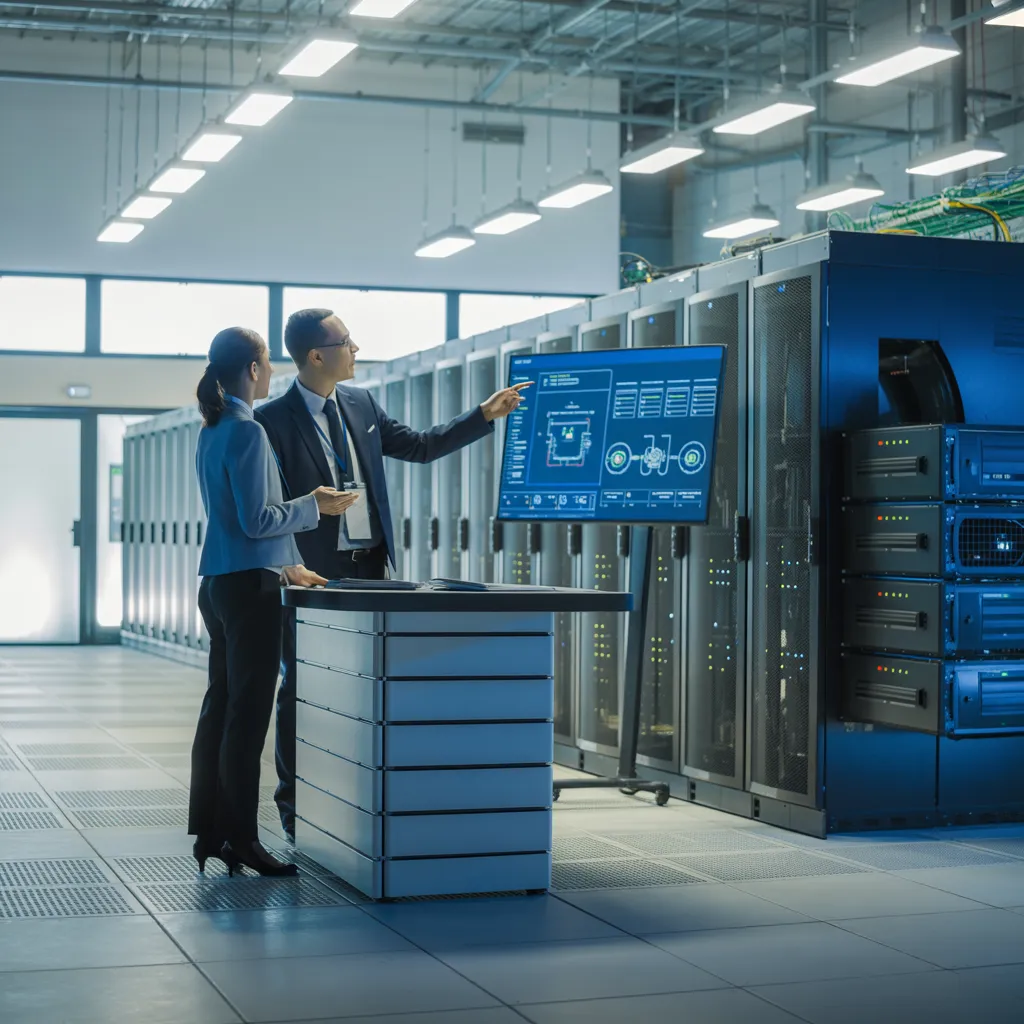
Understanding Retail Colocation: A Comprehensive Overview
Retail colocation gives businesses an adaptable and economical option for managing their IT equipment. This approach enables organizations to secure space within a data center facility, delivering fundamental resources like power, cooling, and security. By sharing a facility with other companies, companies can minimize expenditures connected to building and maintaining their own data centers.
Retail colocation centers are outfitted with cutting-edge technology, providing reliable and flexible operations. Organizations gain access to fast and reliable internet connectivity, redundant power supply systems, and comprehensive security measures, which are generally more difficult to establish on their own.
Additionally, retail colocation enables businesses to focus on their core competencies as opposed to handling in-house infrastructure. It presents a variety of solutions to address a wide range of needs, from small startups to large enterprises. This structure promotes an environment where organizations can seamlessly adapt to shifting technology needs while upholding productive operations.
Top 5 Benefits of Retail Colocation for Business Growth
Five major advantages demonstrate why businesses increasingly choose colocation as a practical approach for long-term success. First, colocation offers cost efficiency by minimizing the expenses associated with establishing and managing an in-house data center. Next, it provides scalability, allowing businesses to expand their infrastructure without substantial financial commitment. As a third advantage, enhanced reliability is an critical benefit; colocation facilities often come with redundant power, cooling, and connectivity, guaranteeing continuous availability. As a fourth consideration, access to advanced technology is a distinct advantage, as colocation centers typically feature state-of-the-art equipment that may be cost-prohibitive for individual businesses. Finally, colocation fosters improved focus on core business activities. By delegating infrastructure management, companies can devote greater attention to strategic initiatives rather than technical upkeep. Taken together, these advantages make retail colocation an ideal solution for businesses looking to optimize their operational efficiency and sustain long-term development.
In What Ways Does Retail Colocation Enhance Data Security?
Although many companies acknowledge how critical data security is, not many are aware of how retail matching information colocation services can greatly enhance their protective measures. Through utilizing collective data center facilities, organizations are provided with cutting-edge security solutions that could prove too costly to implement alone. These colocation centers generally provide robust physical security measures, including biometric entry restrictions, video monitoring infrastructure, and on-site personnel, minimizing threats posed by unauthorized entry.
Furthermore, such facilities frequently offer comprehensive cybersecurity tools, such as intrusion detection systems and firewalls, built to protect critical data. Regular security audits and conformance to industry benchmarks confirm that information remains safeguarded against emerging threats. Moreover, the redundancy offered by colocation services guarantees data availability even during downtime, improving the overall security posture. In conclusion, retail colocation not only streamlines resources but also reinforces data security, permitting companies to prioritize their essential activities with improved confidence.
How Retail Colocation Delivers Scalability and Flexibility
Retail colocation gives businesses the opportunity to seamlessly grow their operations through dynamic resource management. This flexibility allows for swift infrastructure growth, accommodating growth without the need for substantial financial commitment. Moreover, customized solutions can be developed to meet specific organizational needs, improving overall flexibility in a dynamic market.
Dynamic Resource Allocation on Demand
Flexibility and scalability are fundamental characteristics in today's fast-paced digital landscape, and colocation services provide on-demand resource allocation that effectively meets these requirements. Retail colocation empowers organizations to scale their IT infrastructure dynamically in response to real-time requirements. This model allows companies to quickly increase or decrease their server capacity without the long lead times associated with traditional infrastructure investments. Through the use of colocation facilities, organizations gain access to supplementary bandwidth, storage, and computing power on demand, ensuring that they remain agile in responding to market changes. This on-demand approach not only optimizes operational efficiency but also helps reduce costs by eliminating the need for excessive upfront capital expenditure. At its core, retail colocation equips organizations to transition smoothly in response to changing demands.
Rapid Infrastructure Expansion
As businesses increasingly require quick modifications to their IT systems, retail colocation presents itself as a key solution for accommodating growth. This method enables businesses to swiftly grow their capabilities without the weight of substantial upfront costs tied to developing and operating dedicated data facilities. By utilizing shared infrastructure, businesses can obtain extra resources and bandwidth as needed, making certain they can react swiftly to market fluctuations or surges in demand. Retail colocation further offers the adaptability to modify power and space requirements as company needs develop. With robust facilities and knowledgeable support, businesses can focus on their core objectives while seamlessly growing their operational capacity, consequently improving their standing in a competitive business environment.
Customized Solutions for Growth
Harnessing the power of retail colocation, companies secure a fundamental benefit in reaching both scalability and flexibility. This method enables companies to readily adapt their IT infrastructure according to market requirements. Through leveraging shared resources in a colocation facility, organizations can grow their operations without the significant initial expenses linked to constructing and managing their own data centers. The modular design of colocation services enables seamless integration of additional servers and networking equipment as needed. Furthermore, companies can rapidly reduce capacity during quieter periods, maximizing resource utilization. This responsiveness not only enhances operational efficiency but also supports innovation, allowing companies to focus on growth strategies while relying on robust data center solutions to manage their technological needs.
How to Find the Perfect Retail Colocation Partner
Finding the right retail colocation partner starts with a thorough evaluation of infrastructure needs. Businesses must identify their specific needs to ascertain compatibility with potential providers. Additionally, assessing service level agreements is essential to confirm that the preferred partner satisfies performance and reliability benchmarks.
Assess Infrastructure Requirements
When evaluating operational requirements, organizations must carefully assess their unique demands to determine the best retail colocation provider. This assessment begins with identifying current and future data storage demands, as well as connectivity requirements. Organizations should consider their expansion plans and the likelihood of needing flexible scaling options within the facility. Additionally, evaluating power and cooling capabilities is essential, verifying the facility can handle demanding hardware configurations. Security features, including on-site and network-based, need to be thoroughly examined to protect sensitive data. In addition, the physical location of the colocation facility should align with business continuity goals and connectivity demands. By addressing these factors, businesses can reach well-informed conclusions when choosing a retail colocation provider that best supports their operational goals.
Assess Service Level Agreements
Evaluating service contracts is a fundamental step in choosing the right retail colocation partner following an assessment of your infrastructure needs. These agreements establish the obligations and standards between the data center operator and the company, including availability commitments, response time benchmarks, and security protocols. A detailed review of these agreements can uncover critical strengths and vulnerabilities, maintaining consistency with organizational objectives. Important factors to take into account include penalties for non-compliance, escalation procedures, and service credit provisions. Moreover, organizations should assess the service provider's performance record in fulfilling service agreements, as this demonstrates dedication to consistent performance. Ultimately, a well-defined service level agreement fosters a mutually beneficial collaboration, enabling organizations to effectively utilize colocation services for greater operational effectiveness.
Economical Methods for Getting the Most Out of Your Colocation Investment
Enhancing a colocation investment necessitates careful planning and well-informed decisions. Businesses can improve cost-efficiency by thoroughly evaluating their needs before identifying a provider. This ensures alignment with service offerings and prevents unneeded costs.
Implementing scalable solutions is another key strategy. By selecting a provider that supports adaptable scaling, organizations can modify their resources according to evolving demands, thus reducing unnecessary waste.
Consistently evaluating and improving resource usage is essential. Utilizing monitoring tools can identify underutilized assets, empowering businesses to make data-driven decisions regarding reallocation or scaling down.
Negotiating favorable terms in service level agreements (SLAs) can also yield significant savings. Organizations should confirm they understand all costs involved , including undisclosed costs.
Lastly, leveraging energy-saving solutions can decrease overhead costs, further maximizing the investment in colocation. By focusing on these strategies, organizations can confirm their colocation services yield maximum benefits while driving company development.
Common Questions and Answers
What Types of Businesses Benefit Most From Retail Colocation
Businesses operating in finance, e-commerce, and technology fields benefit most from colocation solutions. Such industries demand dependable infrastructure, high-speed connections, and flexible scalability, which allows them to boost performance, lower costs, and enhance overall operational efficiency.
How Is Retail Colocation Set Apart From Traditional Data Centers?
Retail colocation distinguishes itself from conventional data center solutions by providing cost savings, shared infrastructure, and flexible scalability. Businesses benefit from access to advanced infrastructure and enhanced connectivity while avoiding the overhead of operating a private data center.
What Are the Biggest Myths About Retail Colocation?
Common myths about retail colocation include the false belief that it is exclusively designed for large enterprises, unnecessarily expensive, lacks security, and provides restricted scalability options. In truth, it offers adaptability, reasonable pricing, and strong security measures ideal for organizations across different scales.
What Is the Environmental Sustainability Impact of Retail Colocation?
Colocation retail services positively impacts ecological sustainability by improving energy efficiency, lowering carbon emissions, and promoting resource sharing. By centralizing infrastructure, it decreases unnecessary waste and enhances efficiency, supporting greener data management practices in the field.
What Are the Standard Contract Durations for Retail Colocation Services?
Standard contract durations for retail colocation solutions vary between one and three years, although some providers may provide month-to-month arrangements. Adaptable contracts permit businesses to modify their data center demands as circumstances develop.